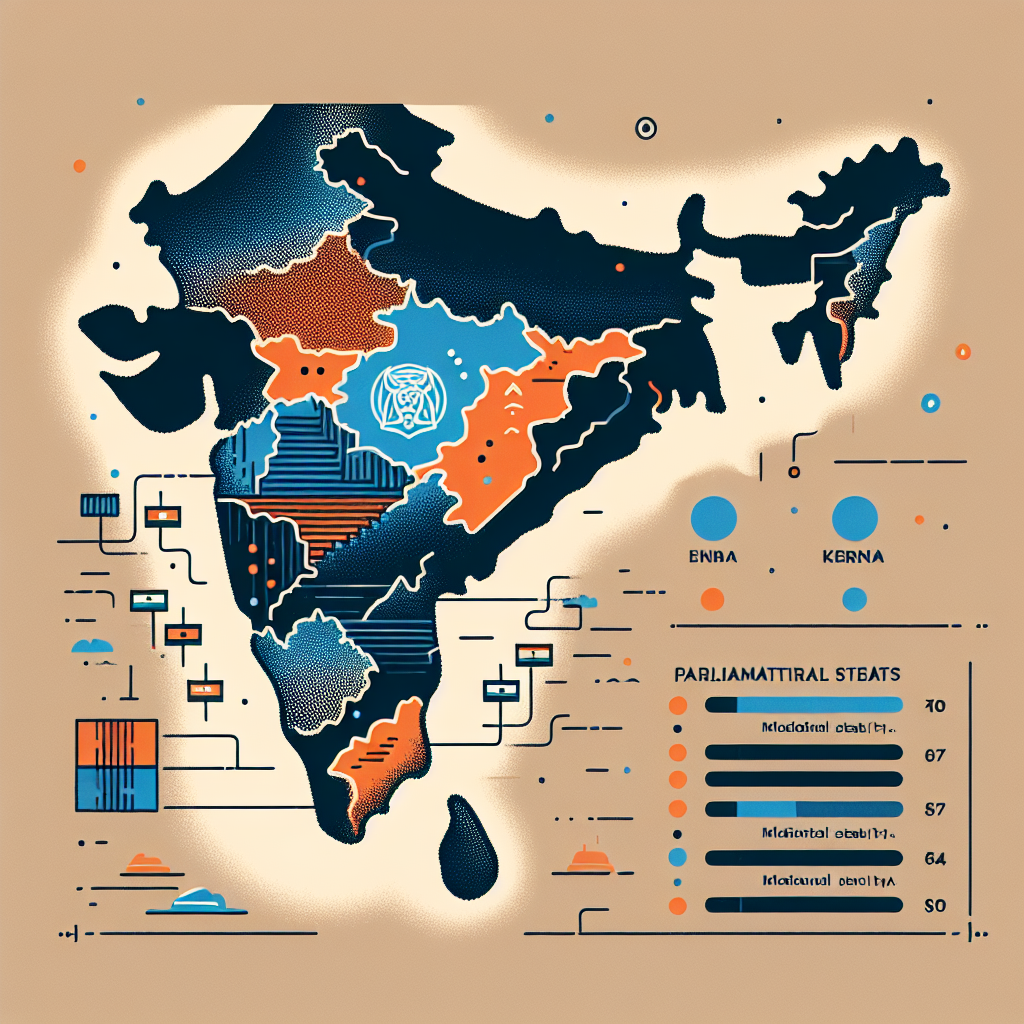
Delimitation — the redrawing of constituency boundaries — often sparks questions about which regions gain influence and which lose it. For many in South India, the debate centers on whether their parliamentary strength will shrink or shift after new maps are drawn.
This article breaks down how delimitation works and why South India’s political weight is unlikely to simply fade. It looks at population trends, seat allocation rules, and the political math that really determines power.
How delimitation actually works
Delimitation is a legal, technical process managed by an independent commission. It uses population data, administrative borders, and rules on reserved seats to redraw constituencies.
The goal is to keep representation balanced as populations change. The commission cannot change the total number of seats unless Parliament permits it, but it can redistribute seats among districts within a state.
Population and seat allocation
Seats are generally divided based on population figures from the latest census used by the commission. States with faster growth can see more constituencies or larger constituency sizes, affecting local political representation.
Reservation and boundary rules
Reserved constituencies for Scheduled Castes and Scheduled Tribes follow specific formulas. These adjustments can shift which areas are reserved, changing local candidate selection and party strategies.
Why South India may retain or increase influence
Several structural factors work in favour of southern states maintaining their clout. Demographic trends, administrative adjustments, and urban expansion can all counteract narratives of decline.
In short, seat count is only one part of influence. Vote concentration, regional party strength, and state-level governance also shape political power.
Population trends and demographic shifts
Some southern states have stable or growing urban populations. Where urban growth is faster, constituencies may become more competitive but not necessarily fewer in number.
Urbanization and constituency mapping
New urban districts and changing administrative boundaries can create fresh constituencies. Cities with expanding voter bases often gain political attention and resources, boosting regional voices.
Political math: beyond just seat counts
Even if a state loses or gains a few seats, alliances and vote shares can amplify its importance at the national level. Regional parties from the South can be kingmakers in tight parliaments.
- Vote concentration: A region with cohesive voting patterns sends stronger signals even with the same number of seats.
- Coalition value: Smaller blocs from southern states can become crucial to forming governments.
- Local leadership: Strong state leadership often translates into national bargaining power.
What to watch in the next delimitation rounds
Key things to track are census data used, changes in district boundaries, and how reserved seats are reassigned. These technical moves determine the practical impact on representation.
Observers should also note how parties adapt candidate selection and campaign focus after maps are released. Strategy shifts often matter more than small numerical changes.
State-level implications
At the state level, changes can alter which regions receive development funds or attention. Marginal constituencies may see more targeted spending and campaigning.
National implications
On the national stage, southern states can maintain leverage by forming cohesive regional platforms, influencing national policy even if seat distributions shift slightly.
Delimitation changes the map, but power depends on demographics, party strategies, and alliance politics. Watching these elements together gives a clearer picture of how influence will evolve.