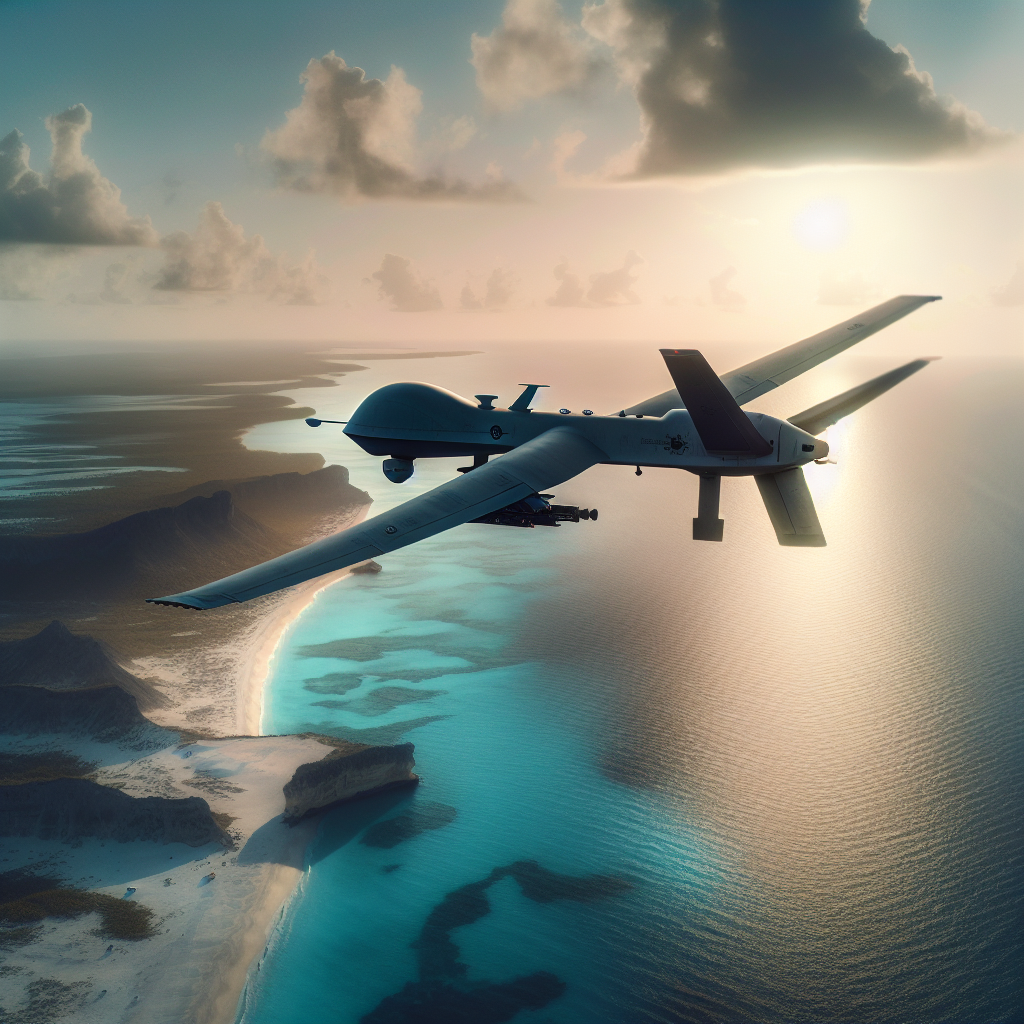
The US Navy’s MQ-4C Triton spent about six hours circling along Cuba’s southern coastline, conducting surveillance near major cities. Reports say it covered areas around Santiago de Cuba and Havana during a prolonged reconnaissance flight.
This incident comes as Pentagon planning around Cuba appears to be increasing, and follows earlier Triton missions in the region. The deployment raises questions about intent, capability, and regional reaction.
What happened during the patrol
Officials and open-source tracking showed a high-altitude maritime drone moving steadily along Cuba’s southern shore. The aircraft maintained a wide, persistent pattern typical of intelligence, surveillance, and reconnaissance missions.
Flight lasted roughly six hours, with the drone operating well within international airspace but close enough to monitor coastal activity and port approaches.
Flight path and timing
Tracking data indicates the Triton followed the full length of Cuba’s southern coast, pausing its course to circle near key urban centers. The timing coincided with heightened talk of policy changes toward the island.
Areas monitored
Observers noted coverage near Santiago de Cuba and Havana, plus stretches of the Caribbean approaches. This pattern suggests an emphasis on maritime traffic, coastal infrastructure and possible naval movements.
Why the MQ-4C Triton is significant
The MQ-4C is a purpose-built maritime surveillance drone with long endurance and advanced sensors. Its presence signals a capability to collect wide-area maritime intelligence without human risk on board.
Such aircraft extend situational awareness far beyond shipboard or shore-based systems, making them valuable for monitoring sea lanes, detecting vessels, and building long-term patterns of movement.
Surveillance capabilities
The Triton carries multimode radars and electro-optical sensors that can image large ocean areas and classify contacts. It can operate at high altitudes for many hours, relaying data in near real time.
Endurance and persistence
Endurance is a core advantage: flights lasting many hours let analysts track changes over time, supporting both tactical and strategic assessments.
Regional and political implications
<pA sustained drone presence near Cuban shores can be read in several ways: routine monitoring, show of strength, or preparatory intelligence gathering. Local and international audiences may interpret the flight differently.
Recent political statements and planning reportedly related to Cuba add context, making such missions more sensitive. Neighbours watch closely for any escalation or shifts in posture.
Signals to Cuba and neighbours
For Havana, the drone is a reminder of American surveillance reach. For regional governments, it signals continued US interest in Caribbean maritime security and intelligence collection.
Diplomatic ripple effects
Actions in the air often prompt diplomatic queries and public statements. Even if flown in international airspace, surveillance flights can influence bilateral relations and regional cooperation frameworks.
Risks and what to expect next
Persistent surveillance carries operational risks, including misidentification, electronic interference, and public escalation. Close monitoring by local forces could lead to tense confrontations if mismanaged.
Future patterns may include more frequent patrols, allied surveillance coordination, or shifts in flight corridors depending on political decisions and on-the-ground events.
Possible scenarios
Scenarios range from routine intelligence collection to targeted monitoring ahead of policy changes. Analysts will watch flight frequency, sensor usage, and any combined operations with ships or other aircraft.
Understanding the full intent behind such flights requires combining technical tracking data with political and diplomatic developments.
As the region reacts, the Triton missions will remain an important piece of the intelligence and maritime-security puzzle, offering a window into evolving priorities and tensions in the Caribbean.