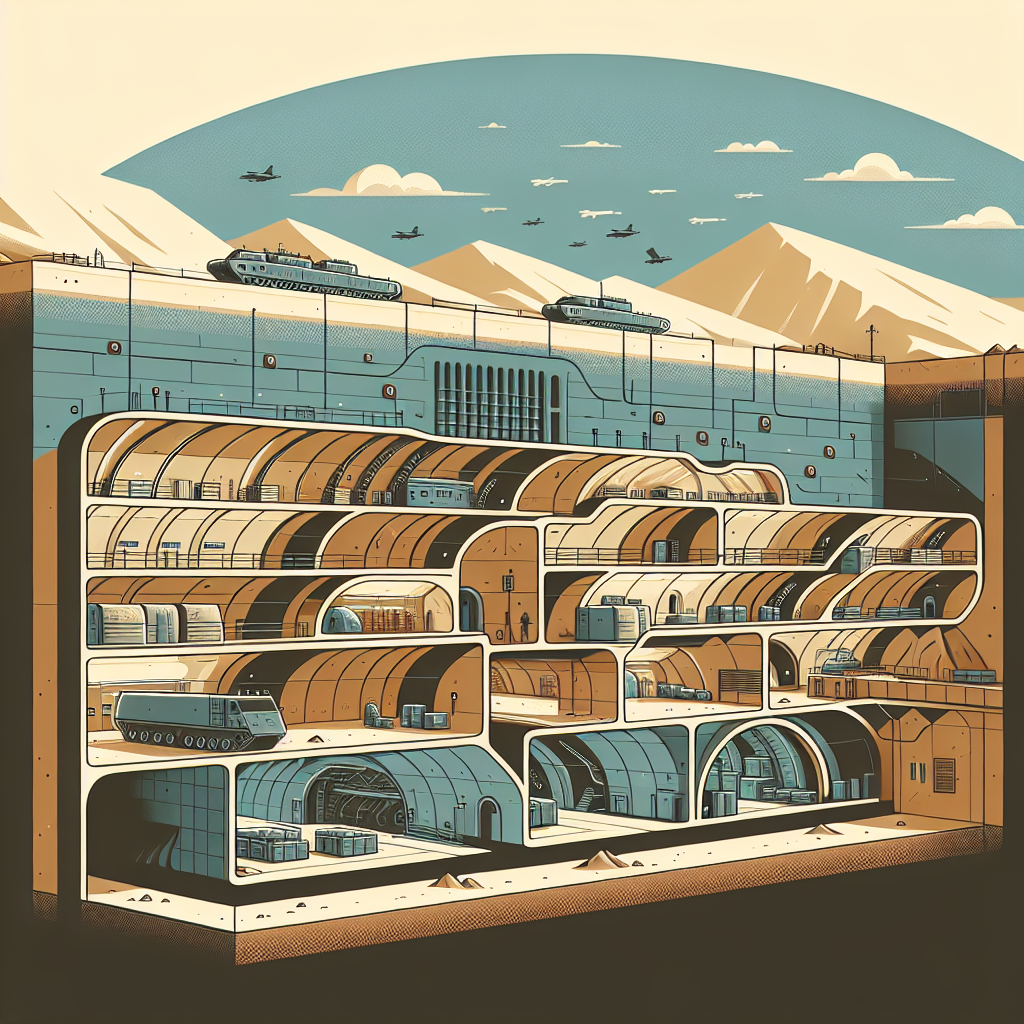
Tensions in the Middle East have pushed military planners to look beneath the surface. Iran’s subterranean network and hardened facilities are emerging as a core part of its deterrence and attack posture.
This article breaks down the likely types of underground sites, the three locations analysts highlight, and what makes them strategically significant in a conflict involving the US and Israel.
Why underground networks matter now
Modern warfare increasingly targets above-ground assets with precision strikes. Underground facilities provide concealment, resilience, and surprise.
For Iran, tunnels and rock-cut complexes reduce vulnerability and complicate enemy targeting, raising the cost of any strike campaign.
Survivability and deterrence
Hard, reinforced chambers protect personnel and weapons from initial bombardment. This increases the chance of a credible retaliatory strike after an attack.
Operational flexibility
Subterranean storage and launch tunnels let forces disperse missiles and munitions while masking true numbers and locations.
Secret Site A: Desert ridge complexes
Analysts describe large tunnel networks dug into desert ridges. These complexes often combine storage, command nodes, and protected launch shafts.
They are hard to detect from standard satellite imagery unless analysts see subtle access roads, ventilation shafts, or heat signatures.
Key features
- Multiple entrances to confuse reconnaisance
- Layered blast doors and anti-shock rooms
- Camouflaged surface infrastructure
Secret Site B: Coastal cavern sites
Coastal caverns give Iran options to defend naval approaches and hide missile systems near key waterways.
These sites may host shore-to-ship missiles and mobile launchers that can move between hidden bays and rugged coves.
Tactical advantages
- Quick access to sea lanes for anti-access operations
- Natural rock cover reduces detection risk from drones
- Integrated bunkers for command and coastal batteries
Secret Site C: Mountain plateau strongholds
High-altitude plateaus carved with chambers offer strategic depth. Elevation helps communications and gives longer-range observation.
These strongholds may combine missile storage with radar nodes and protected troop quarters.
Challenges for adversaries
- Deep rock requires specialized munitions for neutralization
- Weather and terrain complicate large-scale strikes
- Repair and redundancy make sustained suppression hard
What this means for US and Israeli planning
Underground targets force planners to invest in intelligence, specialized munitions, and coordinated strikes to deny sheltered assets.
Accurate mapping and persistent surveillance become critical, as does preparing for asymmetric responses from forces operating from concealed positions.
Any escalation that involves these hardened sites carries a risk of prolonged conflict and uncertain outcomes due to redundancy and concealment.
As the region remains tense, the existence of extensive underground infrastructure changes how engagements might unfold, making underground awareness a core part of strategic assessments.